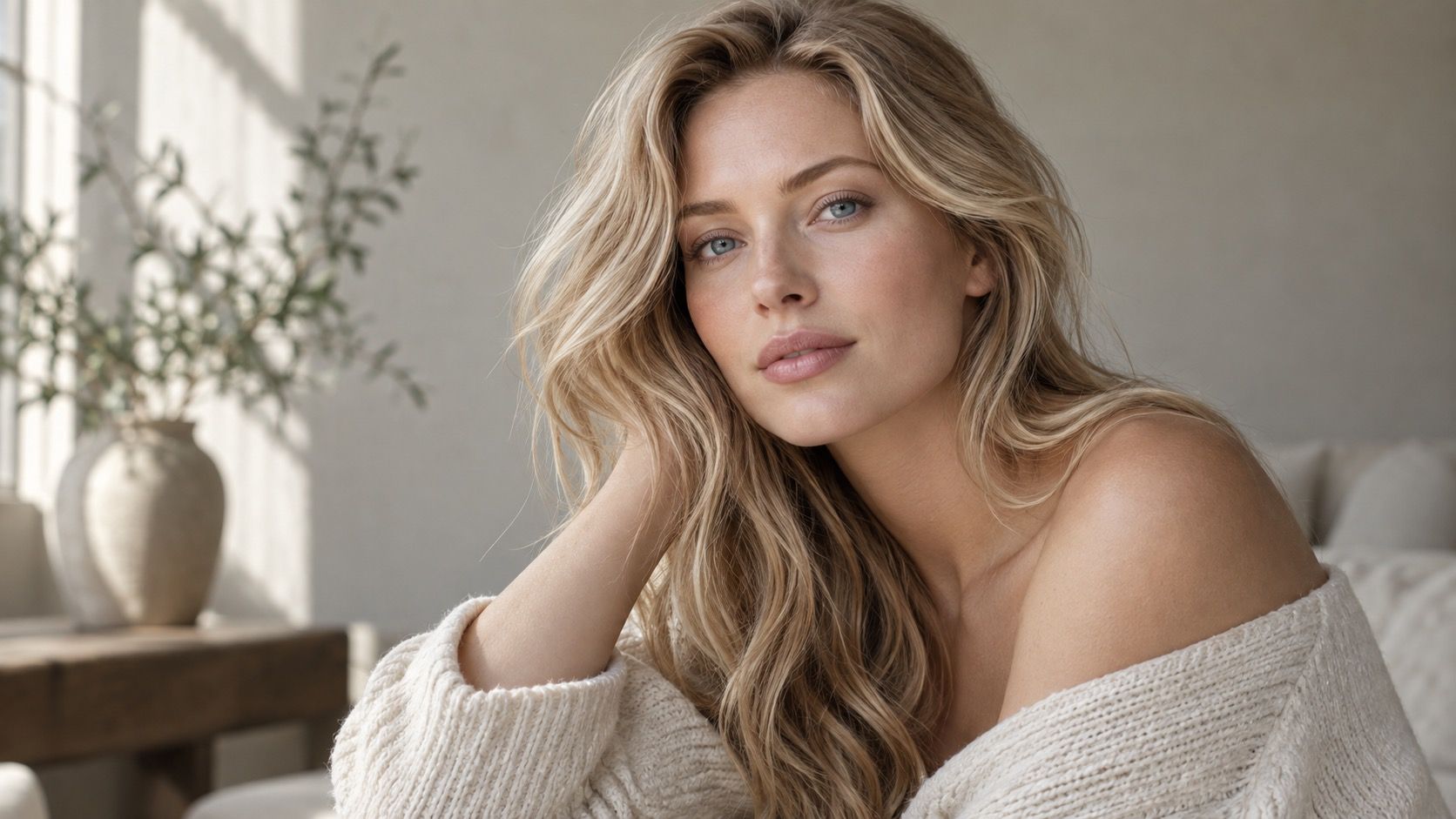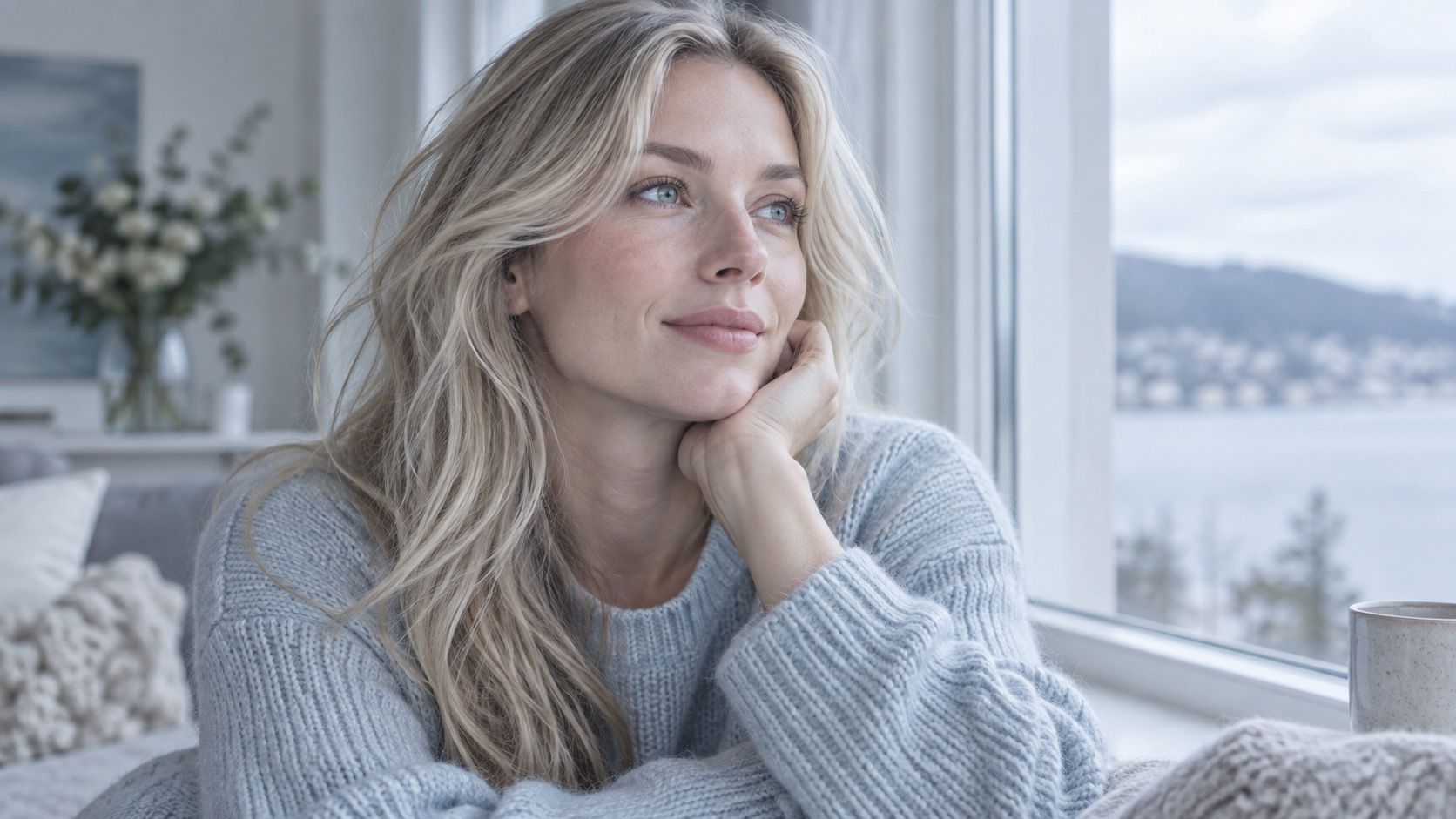
Blue eyes and fair skin can make a new hair color look striking in a reference photo, then surprisingly flat in the bathroom mirror. The useful question is not simply which blonde is prettiest, but how much warmth, depth, and contrast your own face can carry on an ordinary day, under ordinary light, with your natural brows and roots still in the picture.
Begin at the window: undertone gives a better answer than eye color alone
Blue eyes are memorable, but they are a small patch of color in the whole face. Undertone is the steadier clue. Stand near a north-facing window with a clean white shirt or towel at your neck; avoid a yellow ceiling lamp and a phone filter. Skin that reads rosy, bluish, or softly neutral beside white often sits more easily with pearl, cream, cool beige, and muted sandy blondes. Skin that looks peachy, golden, or warm-neutral can usually take honey, wheat, and a restrained strawberry tone without looking overwhelmed.
There is a catch: fair skin can be cool in winter and look warmer after a week outdoors, while a foundation shade may hide the signal completely. Look at the neck, ears, and inner arm as well as the face. A colorist can use this as a starting observation, not a verdict. The aim is to make the complexion look rested rather than to turn it visibly pink or pale.
For a quick clothing check, compare two tops you already own. If crisp navy, charcoal, berry, and cool green make your eyes clearer, a silvery or neutral blonde may be the safer direction. If soft camel, moss, terracotta, or warm ivory are kinder to the skin, a gentle golden beige or strawberry note can make sense. These are the same practical clues behind searches for the best clothing colors for blonde hair, blue eyes, fair skin: your most flattering hair color should work with the colors you actually reach for, not fight them.
Choose a light blonde that leaves some contrast around the face
The usual risk with very fair skin is not that light blonde is forbidden; it is that an all-over pale result removes the edges that make a face readable. A bright platinum can look excellent when brows, lashes, and a short root are naturally strong enough to frame it. On pale brows and naturally light lashes, the same shade may leave the eyes looking less blue rather than more blue. The salon swatch is rarely honest about that because it has no eyebrows attached.
Pearl blonde is often a more forgiving first comparison than icy white. It has a milky, slightly violet-neutral cast, so it can echo a cool or neutral fair complexion without pushing it toward gray. Ask to see it against your natural root and in daylight. If the pearl sample looks almost white against the root, preserve a little depth at the scalp or choose a beige version one level darker.
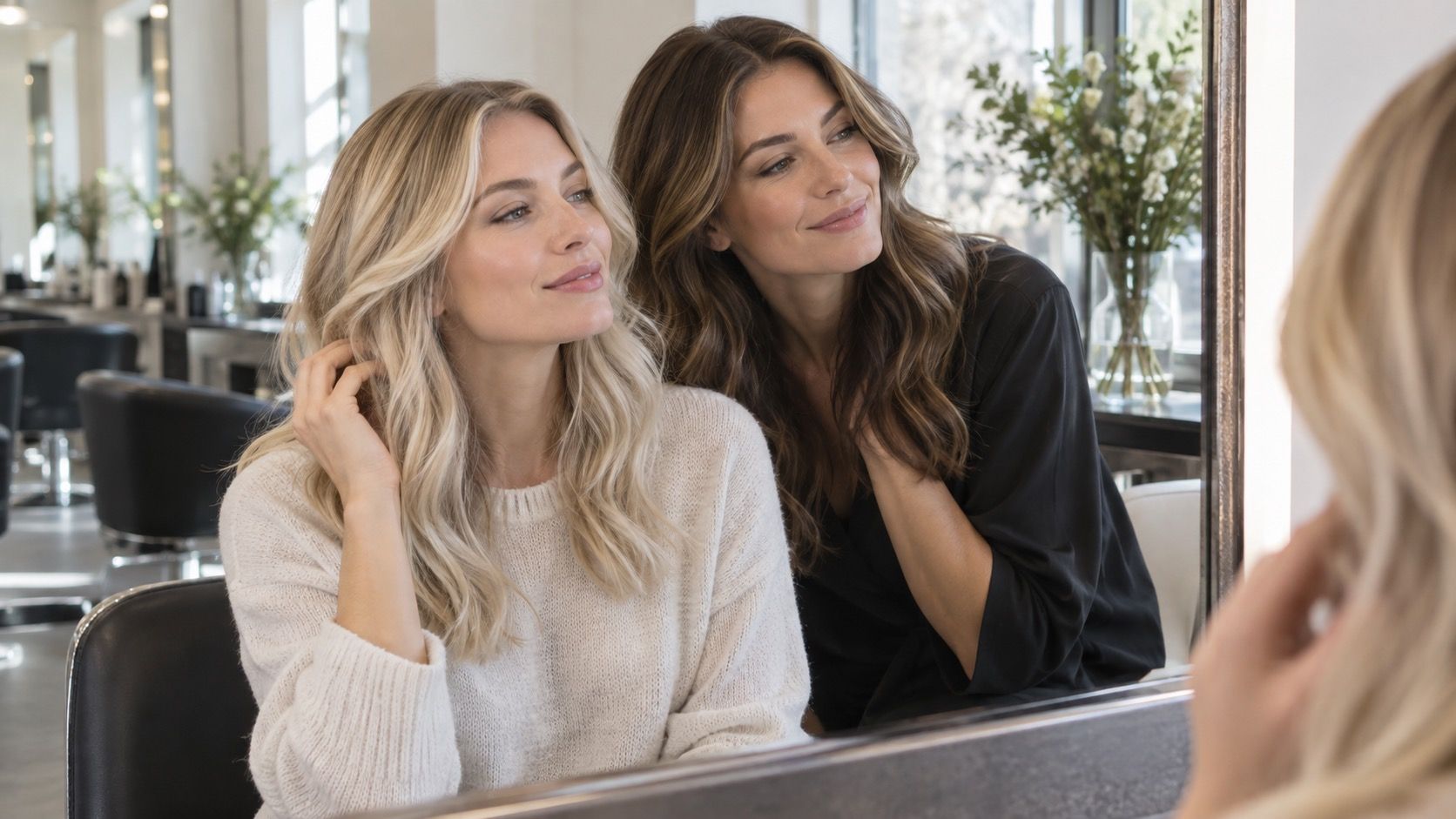
Beige blonde is the quiet middle ground. It is neither a hard yellow nor a hard ash, and that makes it useful when your skin changes between cool indoor light and warmer summer light. The finished color should still have dimension: fine lighter pieces near the face, a softer lowlight behind them, and enough shadow that the ends do not look like one flat sheet. A photograph from a salon chair can hide flatness; a photo taken a few steps from a window will show it.
| Color direction | Often suits | Check before choosing |
|---|---|---|
| Pearl blonde | Cool or neutral fair skin with clear brows or lashes | Make sure it does not erase the root and brow contrast |
| Soft beige blonde | Fair skin that reads neutral in daylight | Ask for dimension, not one opaque block of lightness |
| Honey-wheat blonde | Peachy or warm-neutral fair skin | Compare it with your usual ivory and black clothing |
| Dark blonde with highlights | Anyone who wants blue eyes framed rather than washed out | Keep the face-framing pieces soft enough to avoid stripes |
Use beige, golden, or strawberry warmth as a measured choice
Warmth is not a mistake on pale skin. It only becomes a problem when it is too saturated for the person wearing it. A beige-gold blonde can make blue eyes appear cleaner because blue and gold sit in visible contrast, but a heavy yellow cast may pull attention toward redness around the nose or chin. The difference is often one of placement: a few warm ribbons around the face are easier to live with than a uniform bright-gold result from root to end.
Strawberry blonde deserves the same restraint. On fair skin with peach or neutral undertones, a soft copper-gold veil can look natural and make blue eyes appear more luminous. On strongly rosy skin, a vivid orange-red may magnify the flush. That does not make strawberry blonde impossible; it means the reference should show a muted, low-saturation version and a natural root, not a glossy studio image. Bring a photo where the model has a similar brow depth and starting color, rather than only similar eye color.
If you are asking what colors look good on blondes with blue eyes and pale skin, the practical answer includes dark blonde and soft bronde as well. They create a stronger frame while letting a lighter money piece catch the eye. This route tends to be easier when a very pale blonde looks beautiful for an hour in a try-on but somehow unfamiliar in every unfiltered selfie.
Let a darker root do the framing work
A root shadow is not merely a way to postpone maintenance. With blue eyes and fair skin, it can restore the contrast lost when the lengths become very light. A soft dark-blonde root melting into beige or pearl ends gives the eye a place to start. The root should look like a blurred transition, not a horizontal line. At the parting and temples, that distinction is obvious within two weeks of regrowth.
Choose its depth relative to the brows. If your brows are light taupe, a very dark espresso root can make the hair look detached from the face. A root close to your natural level, perhaps one or two levels deeper than the highlighted lengths, is usually less theatrical and easier to grow out. If the brows are naturally medium brown, a slightly deeper root can make the blue in the iris look more deliberate without requiring brighter ends.
Look at your hair tied back before deciding. A color that only works when loose, curled, and facing a ring light may be too dependent on styling. A balanced root and a few light pieces should still make sense in a ponytail, at the office, and in a car mirror at four in the afternoon.
Bring reference photos that reveal the starting point, not just the finish
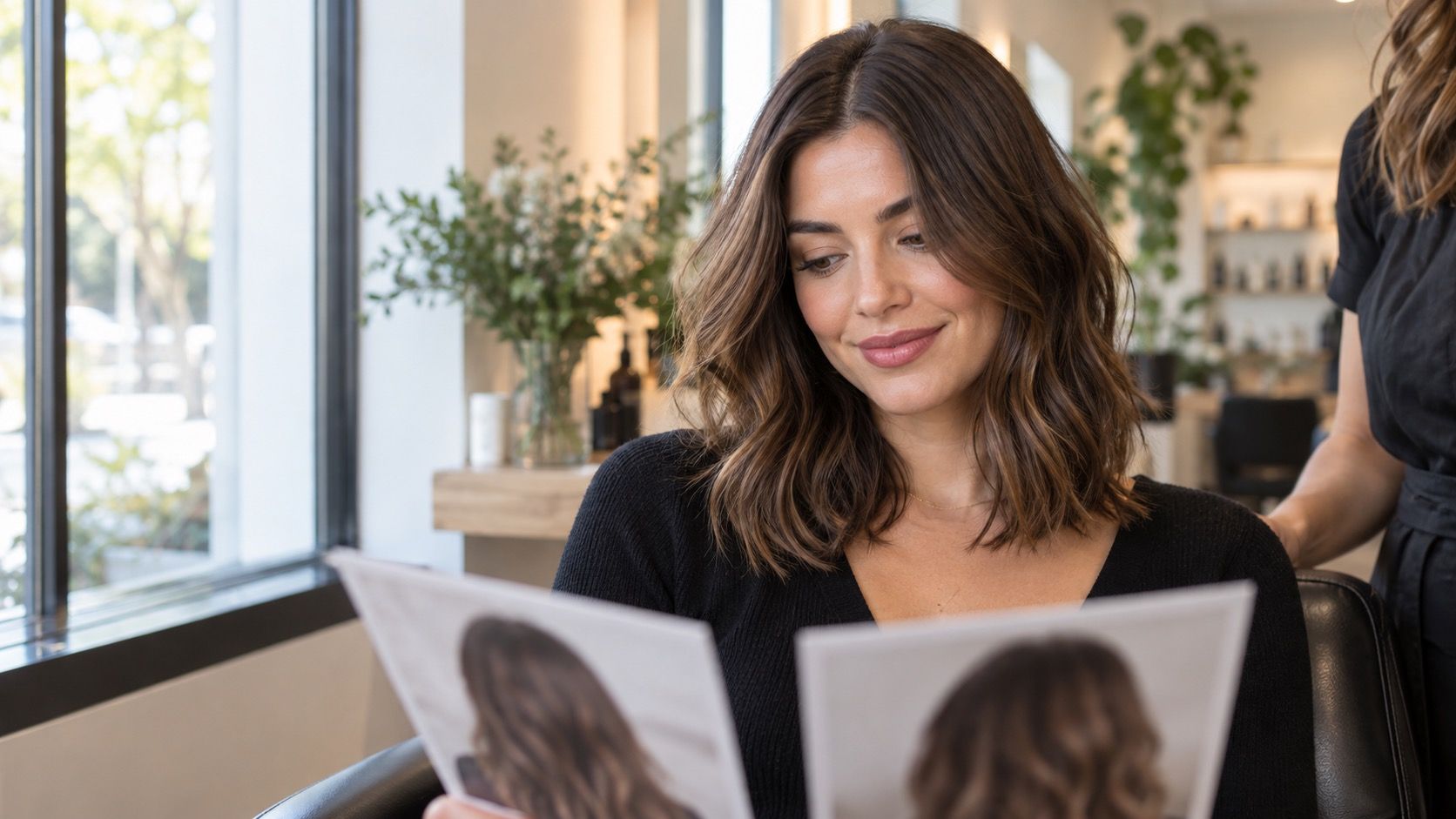
The most useful salon references show daylight, a visible parting, and hair that is not heavily waved. Collect three: one for the overall depth, one for the warmth or coolness you like, and one showing the brightness around the face. Then add a current photo of your own hair in daylight. This small set tells a clearer story than ten nearly identical blonde pictures with different editing.
Pay attention to the model's natural base. A pale pearl blonde on someone who began at dark brown may involve a different process, upkeep, and tolerance for visible regrowth than the same look on naturally dark blonde hair. Your previous color matters too. Old highlights, tinted ends, and sun-faded lengths can make a beige target land unevenly. A digital preview is good for testing the direction, but it cannot reveal how every section will reflect light after a real color service.
Finally, decide what you want the color to do on a normal morning. Do you want your eyes to be the first thing people notice, or do you want a warm, sunlit overall effect? Pearl and cool beige usually favor the first outcome; honey, wheat, and strawberry can favor the second. There is room between them. The most convincing color is often the one that still looks like you, only with the balance adjusted in the right place.