The most convincing Cool Summer hair colors tend to look quiet at first glance: cool, softened, and neither dramatically dark nor brightly golden. That restraint is useful when your features read as light and low contrast, because a shade can be technically cool yet still overpower the face if its depth, shine, or highlight pattern is too strong.
What makes a hair color read as Cool Summer
Cool Summer is often described with words such as misty, blue-based, muted, and light-to-medium. Those are useful clues, not a test you have to pass. In front of a bathroom mirror, the practical question is simpler: does the hair color let the eyes, skin, and brows stay visible together, or does the hair become the first and loudest thing in the frame?
A cool cast matters, but it is only one part of the result. A stark silver blonde can be cool and still look disconnected from pale skin or soft blue eyes. A dark espresso brown can avoid orange entirely yet create a hard outline around a face that normally looks more harmonious in smoky navy, dove gray, soft berry, or muted clothing colors.
Look for a blend of three qualities: a cool or cool-neutral undertone, moderate depth, and reduced saturation. Ash tones help, although the goal is not flat gray hair. The best Cool Summer hair color usually has enough beige, taupe, or soft brown in it to feel believable in daylight. If a salon swatch looks icy under bright lights but metallic or greenish beside your face, it is probably too far from that balance.
Choose depth before chasing an ash tone
Depth has more impact than the label on a color tube. Start by comparing the natural shadow at your roots with the lightness of your brows and eyes. If your natural base is a soft level 6 or 7 brown, jumping to a level 10 ash blonde may make the new hair arrive before the person does. A level 7 smoky beige blonde, built with fine highlights, often keeps the overall look lighter without erasing the natural anchor at the scalp.
For someone who already has light hair, the opposite mistake is adding too much contrast with a very dark root shadow. Root shadows can make grow-out easier, but the shadow should be diffused and only a step or two deeper than the surrounding lengths. A broad level 4 band above cool blonde ends reads more graphic than soft; it can be flattering on a high-contrast Winter look, but it often feels heavy on a Cool Summer palette.
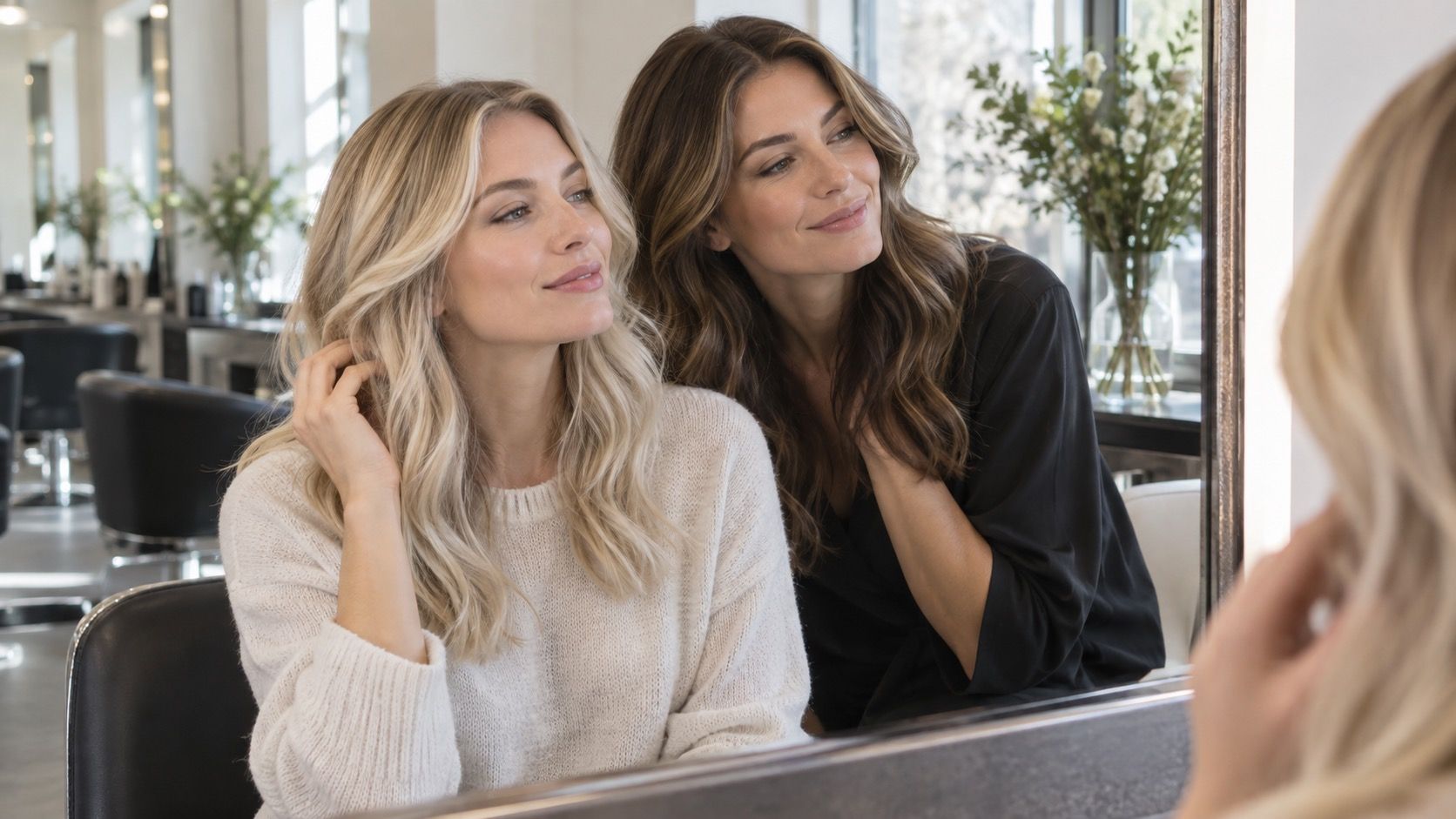
When trying on colors in a photo, crop out a busy background and use a front-facing image taken near a window. Compare two versions at the same depth before comparing ten different tones. One image in soft mushroom brown and one in medium ash brown will reveal more than a collage of filters. Check whether redness, under-eye shadows, and uneven skin texture become more noticeable; those small changes are often more informative than whether the color looks fashionable on its own.
| Starting point | Useful direction | Watch for |
|---|---|---|
| Light natural blonde | Smoky beige blonde with very fine cool lowlights | Overly white highlights that remove softness |
| Dark blonde or light brown | Mushroom brown or a cool beige balayage | A dark, sharply defined root shadow |
| Medium brown | Soft cool brown with ash-beige ribbons around the face | Blue-black depth or chunky contrast |
| Previously warm color | Neutral-cool gloss before a major lightening service | Trying to cancel orange with an excessively gray formula |
Blonde directions that stay soft
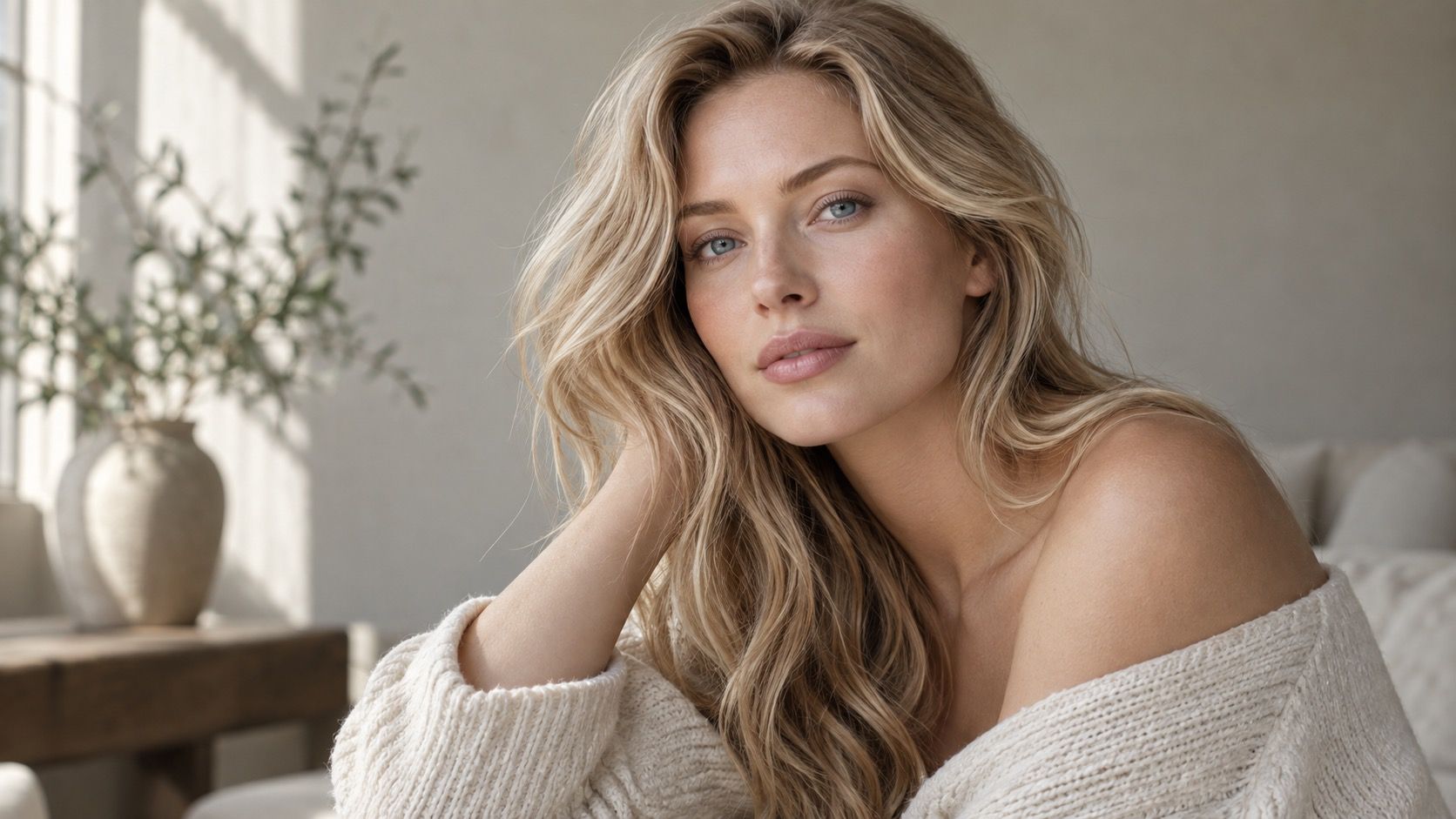
For many Cool Summers, blonde works best when it is described as beige, smoky, pearl-beige, wheat-neutral, or ash-beige rather than platinum. The wording matters because it points away from yellow brightness and away from a blue-violet finish that can look artificial after the first few washes. A good reference is the color of pale driftwood or oatmeal in cool daylight: light, but not sparkling.
Fine babylights are usually easier to wear than wide foil stripes. They keep the transition from root to length blurred, which matters when the face has soft contrast. Ask for a little more lightness around the temples and cheekbones, then scatter the rest through the mid-lengths rather than putting all the brightness at the ends. This gives the hair movement without turning it into a highlighter effect.
Smoky beige blonde is especially useful when the natural base is not very light. It has enough neutral pigment to avoid the hollow, dusty look that can happen with a pure ash toner on yellow hair. The final gloss should be judged after the hair is dried completely; wet hair can make a formula look cooler and darker than it will look at home. Take a quick photo by a north-facing window before leaving the salon, since warm salon bulbs are generous to almost every blonde.
Brown and brunette options without heaviness
Cool Summer does not need to stay blonde. A soft cool brown can look more polished and less demanding, especially if the natural hair has medium density and a dark-blonde base. Mushroom brown is a dependable direction because it combines taupe, soft ash, and beige-brown rather than pushing red or black. It looks dimensional when the hair moves, yet it does not create an obvious dark border around the face.
A medium cool brown benefits from small changes in value. Think of a level 6 base with a few level 7 ash-beige pieces, not one opaque block of brown. That slight variation is what keeps the color from reading muddy. If your hair pulls warm naturally, a cool brown gloss may need refreshing more often than a warmer brunette shade, but that is usually easier than repeatedly lightening the whole head to fight a brassy base.
Be cautious with labels such as mocha, cocoa, and chestnut because brands use them differently. Some contain a red or gold reflection that looks rich on the swatch and warm in daylight. Ask to see the formula family or a strand test against a gray towel, then check the result beside a muted mauve or dusty blue top. If the hair suddenly makes those colors look faded, the brown is probably too warm or too deep for the gentle effect you wanted.
How to keep brass from changing the effect
Brass control is less about using purple shampoo every day and more about understanding where warmth is appearing. Yellow usually shows through the lightest blonde sections; orange appears in darker lifted brown hair; copper can show at the roots when a permanent color fades. A violet cleanser can help pale yellow, while a blue-toned product is more relevant for orange. Using the wrong one heavily can leave porous ends dull, smoky, or uneven.
Most cool shades hold better with a modest routine: heat protection before hot tools, a color-safe shampoo, and a gloss appointment or at-home glaze when the tone begins to fade. Purple shampoo is better treated as a short correction than as basic cleansing. Start with one wash every week or two, watch the ends, and rinse well. If the hair feels dry, the next step should be conditioning rather than a stronger toner.
Water changes the picture more than people expect. Hard water can leave mineral buildup that makes light lengths look yellow or muted brown look flat. If the color starts looking wrong only a few weeks after a salon visit, try a chelating treatment before booking a dramatic recolor. It is also worth checking hair in daylight after a few regular washes. A cool shade that survives ordinary life is more useful than one that looked perfect under the salon ring light.
Bring a clearer request to a color appointment
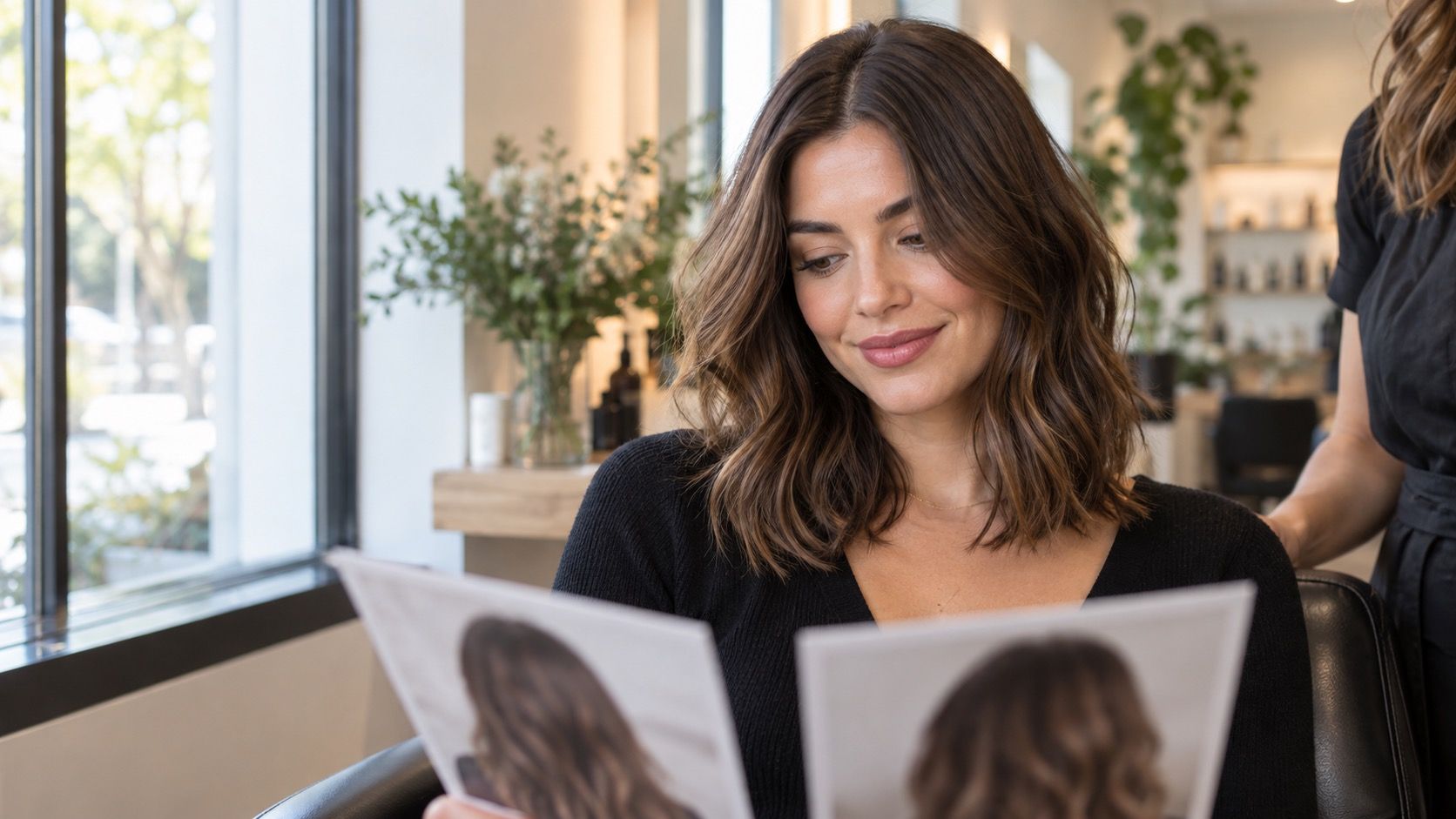
Instead of asking only for ash blonde or cool brown, describe the visual problem you are trying to avoid. You might say that you want a light, muted result with no obvious gold, but that you do not want silver or a very dark root. Bring two or three photos that share depth and softness, not ten photos with unrelated lighting. A photo of an achievable root area is often more useful than a flawless blowout shot of the ends.
Tell the colorist about previous box dye, highlights, henna, chlorine exposure, and how often you can return for maintenance. Those details affect whether smoky beige blonde is realistic in one appointment or whether a cooler gloss and gradual highlights are the safer route. A good plan can be quiet: a few face-framing pieces, a softened root, and a gloss may make more sense than a full transformation.
Cool Summer hair colors work when they preserve a low-contrast impression rather than forcing a seasonal label onto every feature. Use a try-on as a comparison tool, then judge the winning version in plain daylight, beside the clothes you actually wear. If the color makes your complexion look calm and your eyes stay present without demanding attention, it is doing the job.