Choosing hair color by undertone is useful when it gives you a shorter, more honest shortlist—not when it turns into a rigid quiz with one supposedly correct answer. I treat it as a way to notice why a shade that looks polished on a color chart can make a face look flat in an ordinary bathroom mirror. Daylight, natural contrast, existing color, and how much upkeep you can tolerate still get a vote.
Start with the question you are actually trying to answer
Most people do not need a label for life; they need to decide between two or three colors before booking a salon appointment or buying a box dye. Are you wondering whether caramel will look golden rather than brassy? Whether an ash brown will look expensive rather than gray? That is a much more useful starting point for hair color analysis than trying to prove you are entirely warm or entirely cool.
Undertone means the quieter cast beneath the surface of the skin. Surface color changes quickly: cheeks can be red after exercise, a forehead can tan, and under-eye shadows can look blue after a poor night of sleep. Undertone tends to be steadier, but it is subtle. A person can have fair skin with a cool pink surface flush and still look best in a softly warm beige brown. Another can have olive-looking skin and find that very yellow blonde makes the complexion appear green. The goal is observation, not a verdict.
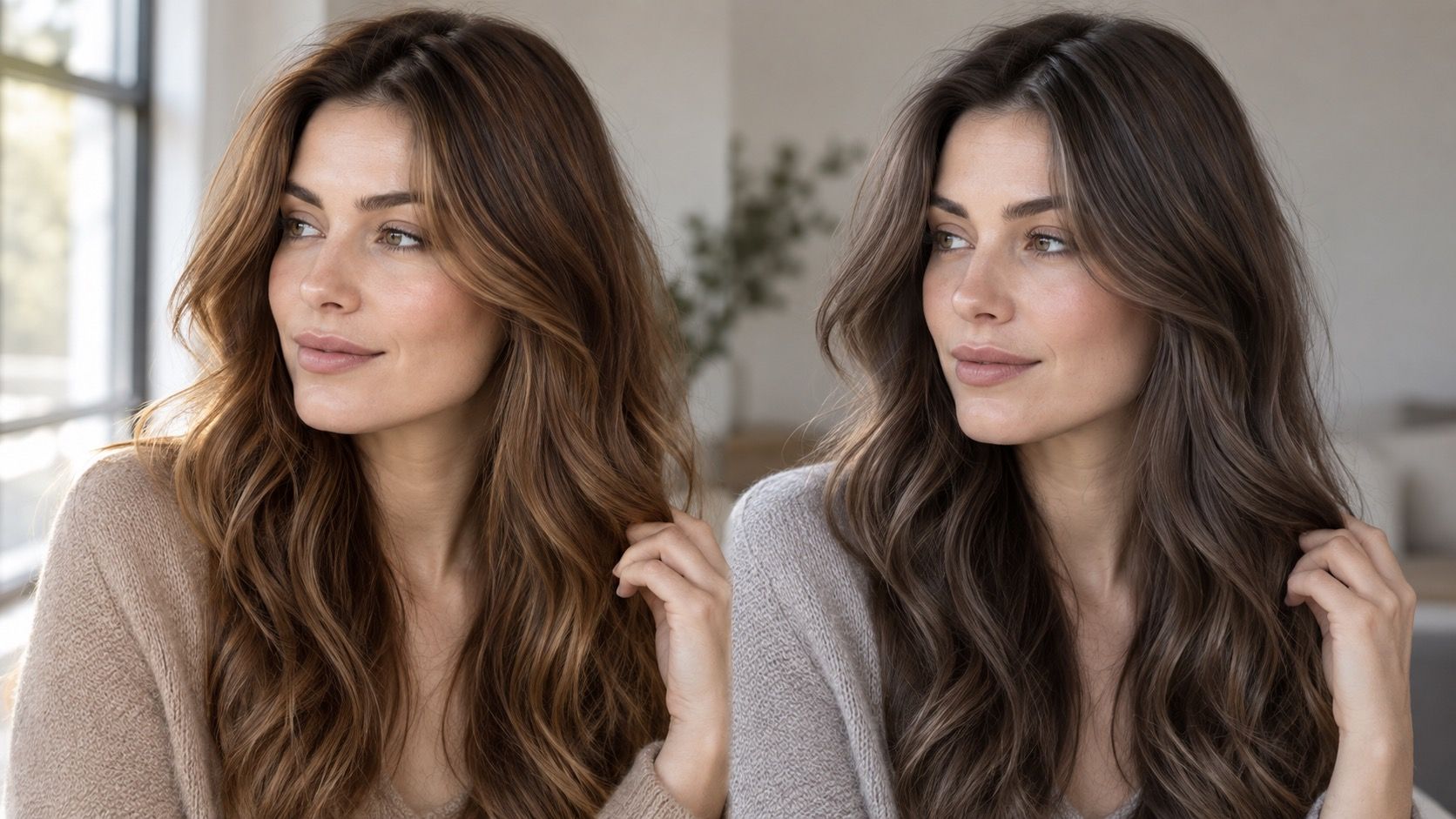
For a free hair color analysis at home, stand near a window in indirect daylight with a plain white T-shirt or towel near the face. Pull hair back, remove strongly colored makeup if practical, and take a neutral photo without a beauty filter. Then place two virtual swatches beside the face: one slightly warmer and one slightly cooler. You are looking for the shade that makes the eyes, lips, and skin look clear first. The wrong one often becomes the first thing you see.
Do not mistake redness, tan, or lighting for your undertone
The popular vein test can be a nudge, but it is not evidence strong enough to choose permanent color. Veins may look blue, green, or both depending on skin depth, room light, and how close you are staring at your wrist. The jewelry test has the same limitation: gold may work because it is the finish you wear most, while silver may look more harmonious in daylight. Both are clues, not a pass-or-fail exam.
I prefer a small daylight comparison. Hold a muted peach fabric, then a muted rose or blue-gray fabric under the chin. If peach makes the skin look lively while the cooler cloth brings forward redness or shadows, warmth may be worth testing in hair. If the rose makes the whole face look calmer and peach looks oddly yellow, begin on the cool side. If neither produces a dramatic effect, neutral colors are probably your sensible territory.
Be especially cautious after sun exposure, self-tanner, or a recent facial redness flare. These affect the surface and can make a color decision feel obvious for a week. A salon colorist can see the same trap under bright chair lights. Ask to look at swatches by the front window, or at least glance outside before committing to a big tonal change. A brown that reads soft indoors can reveal a distinctly orange cast in midday light.
Compare cool and warm hair color families in real shades
“Cool” does not simply mean dark, and “warm” does not mean bright copper. Cool families usually contain blue, violet, smoky, or muted beige influence: ash brown, mushroom brown, cool espresso, pearl blonde, icy beige, and blue-black are common examples. Warm families lean gold, copper, amber, honey, cinnamon, chestnut, or mahogany. A shade can be beautiful within either family, but the amount of warmth matters as much as the name on the salon board.
| If you are testing | Try this comparison | What to check in daylight |
|---|---|---|
| Medium brown | Chocolate brown versus ash or mushroom brown | Does one make the jawline look clearer while the other makes the skin look sallow? |
| Blonde | Honey beige versus pearl beige | Watch the area around the mouth and under the eyes, where excess yellow or gray shows quickly. |
| Red | Copper auburn versus berry or mahogany red | Check whether the red supports the natural lip color or competes with it. |
| Very dark hair | Soft black or espresso versus blue-black | Notice contrast: a cooler black can look crisp, but it can also make light skin appear drained. |
There is a practical reason to compare adjacent shades rather than opposite extremes. Almost nobody needs to choose between platinum and jet black on the first pass. Two similar browns expose the relevant difference: one might be too orange, the other too smoky, while the third looks like it belongs with your skin. That is the small decision that makes a hair colour analysis usable.
Neutral undertones get more room, but not a blank check
Neutral undertones often tolerate both warm and cool colors, especially when the colorist keeps the tone soft. That does not mean every shade will work equally well. Natural contrast still matters. Someone with soft brows, gray-green eyes, and medium skin may look overwhelmed by a high-contrast blue-black even if the undertone is neutral. The same person could wear a neutral dark brown with a subtle root shadow comfortably.
For a first try-on, neutrals can test beige, balanced chocolate, neutral caramel, soft auburn, and dimensional bronde. “Balanced” is the key word. Avoid judging a swatch only from its center; look at the hairline and the pieces nearest the eyes. A face frame in pale gold may be the part that feels wrong, even when the overall color seems acceptable. Conversely, a faint cool lowlight may make a warm-looking base feel more grounded.
If you regularly alternate between gold and silver jewelry without either looking awkward, that is another reason to use neutral shades as a base. Treat the salon formula as adjustable: a neutral brown can be warmed with a gloss in autumn or cooled slightly when summer tan fades. This is less dramatic than declaring a seasonal identity, but it is more useful when you live with the hair every morning.
Use an honest preview before you ask for a close-call shade
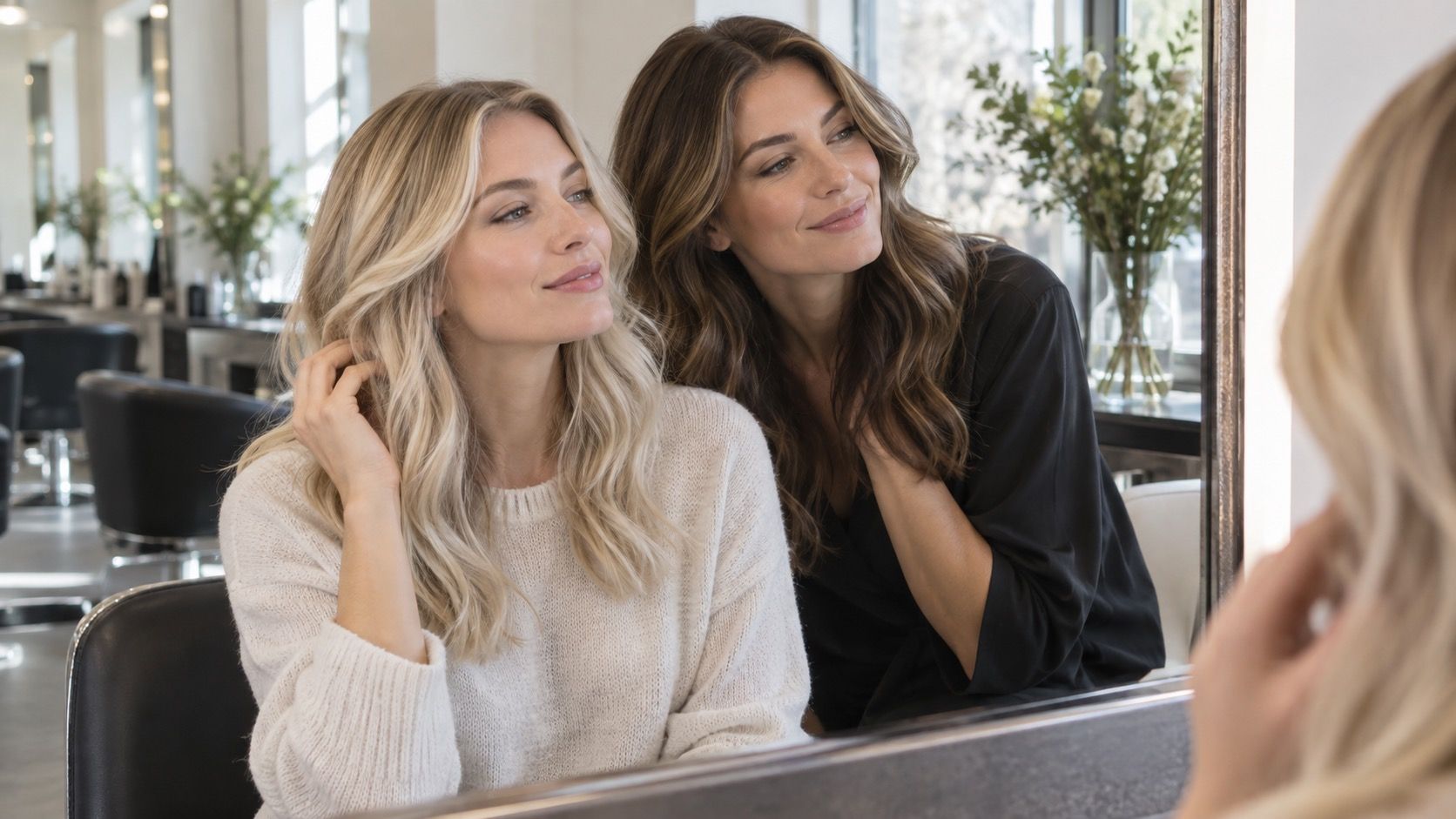
A virtual preview is best at answering visual questions, not predicting chemistry. Upload a photo taken in window light, with the face forward, hair visible from roots to ends, and no strong color filter. Test the same shade against your current color, not against an imagined blank canvas. If your ends are lightened or porous, they may grab warmth differently from the roots; a preview cannot show that, but it can show whether the direction is worth pursuing.
Save three images: the safest choice, the slightly warmer choice, and the slightly cooler choice. Look at them later on a normal screen, not only inside the try-on tool. The best result often becomes clearer after ten minutes because you stop admiring the novelty. It should make the face appear rested and intentional rather than make the hair color announce itself before anything else.
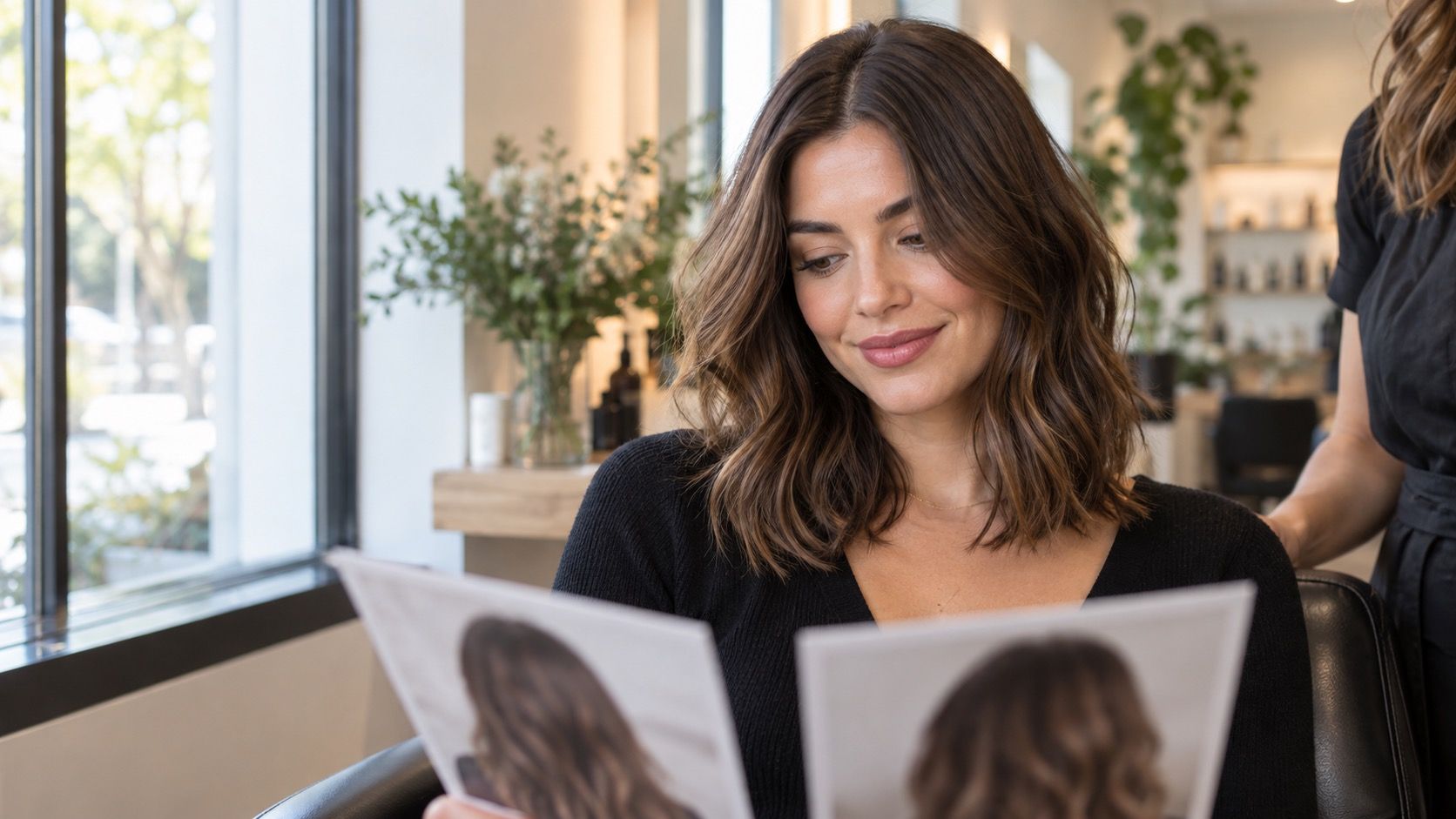
Bring those references to a strand consultation, especially for blonde, red, previous box dye, or a major move from warm to ash. Say what you liked in each image: “I prefer this depth but not this yellow,” or “I like the coolness here but do not want a gray cast.” That language gives a colorist something workable. It also leaves space for a professional to explain lift, existing pigment, and why a flattering direction may take more than one session.
Let maintenance and natural base settle the final choice
Undertone narrows the field; root regrowth decides whether you will still like the choice eight weeks later. Compare the proposed shade to the natural base at the part line. A blonde that is several levels lighter than dark roots may be flattering on day one but demand frequent lightening. A warm gloss over a similar-depth brown can usually fade more quietly. Neither option is morally better; they are different agreements with your calendar.
Before choosing, ask how the color will fade, what will happen at the roots, and whether the face frame needs separate upkeep. Ask to see the shade in daylight and on hair with a texture close to yours. Curly hair breaks up ribbons of color; very straight hair shows banding and uneven warmth much sooner. These are small checks, but they prevent the familiar disappointment of choosing from a glossy, backlit photo and seeing a different result in a supermarket window.
Good hair color by undertone is therefore less about obeying warm-versus-cool rules than building a comparison you can trust. Start with two nearby tones, view them in daylight, keep an eye on contrast and surface redness, then choose the option that still feels believable beside your natural roots. The quiet answer is often the one you can enjoy longest.