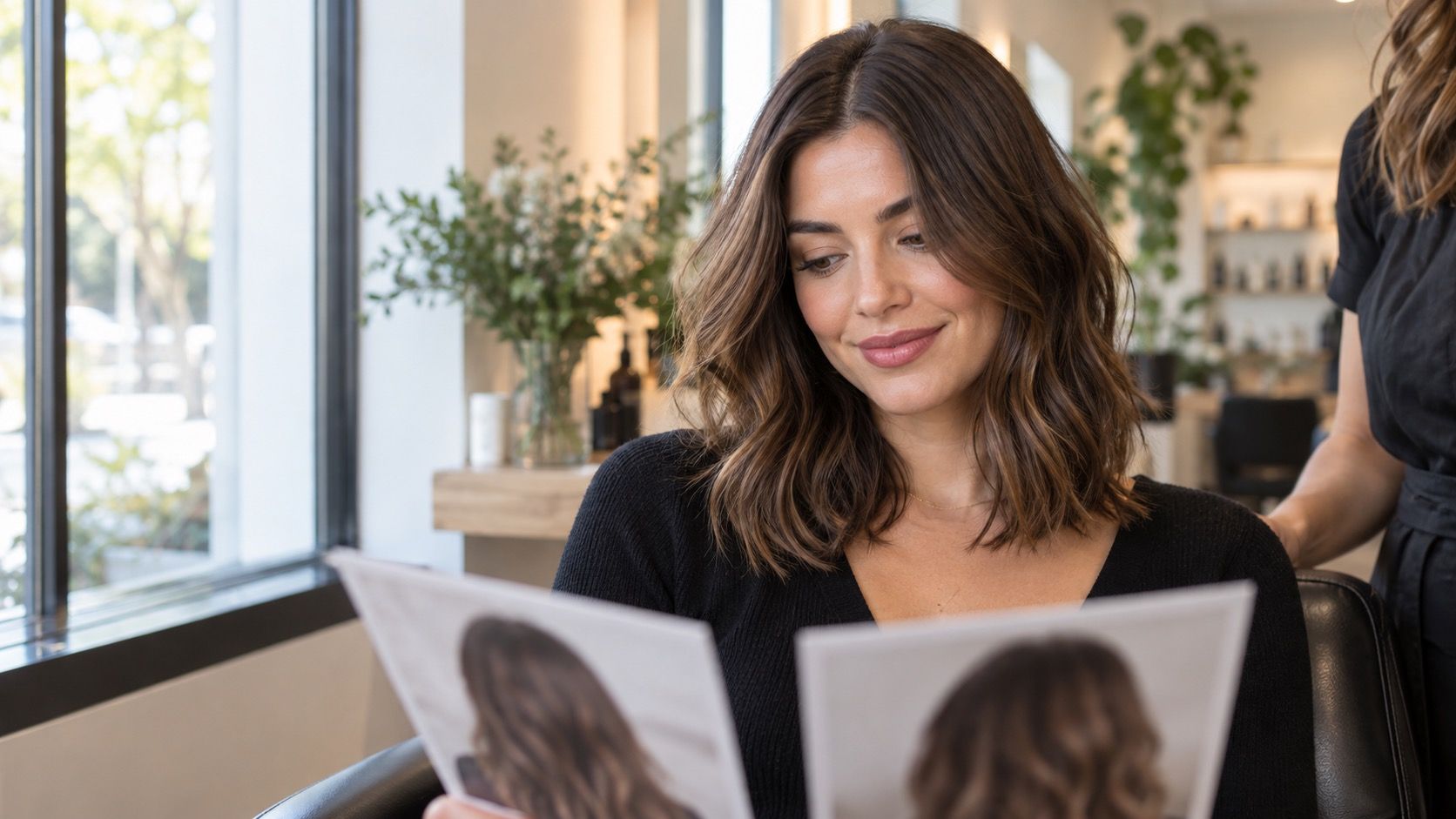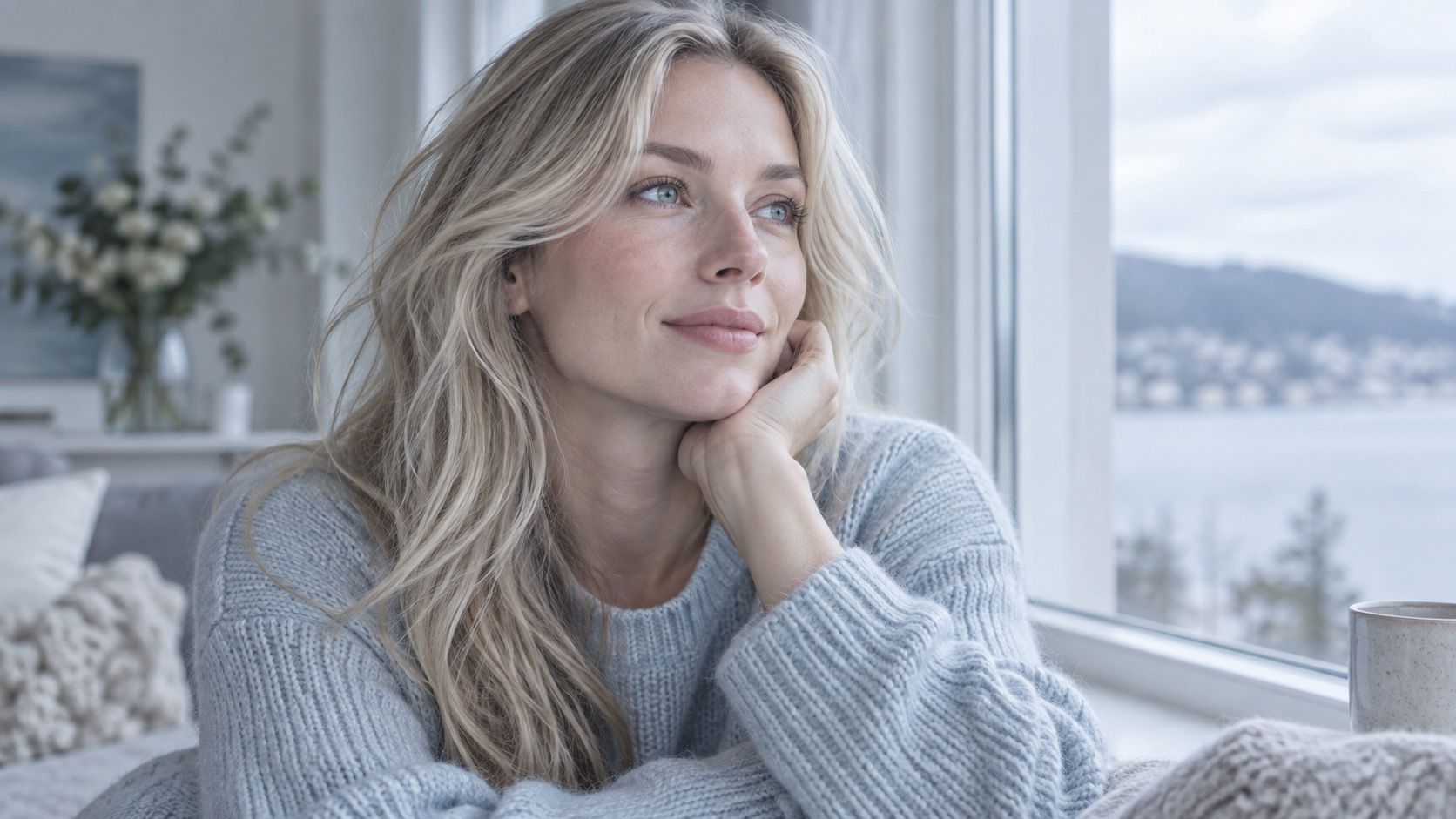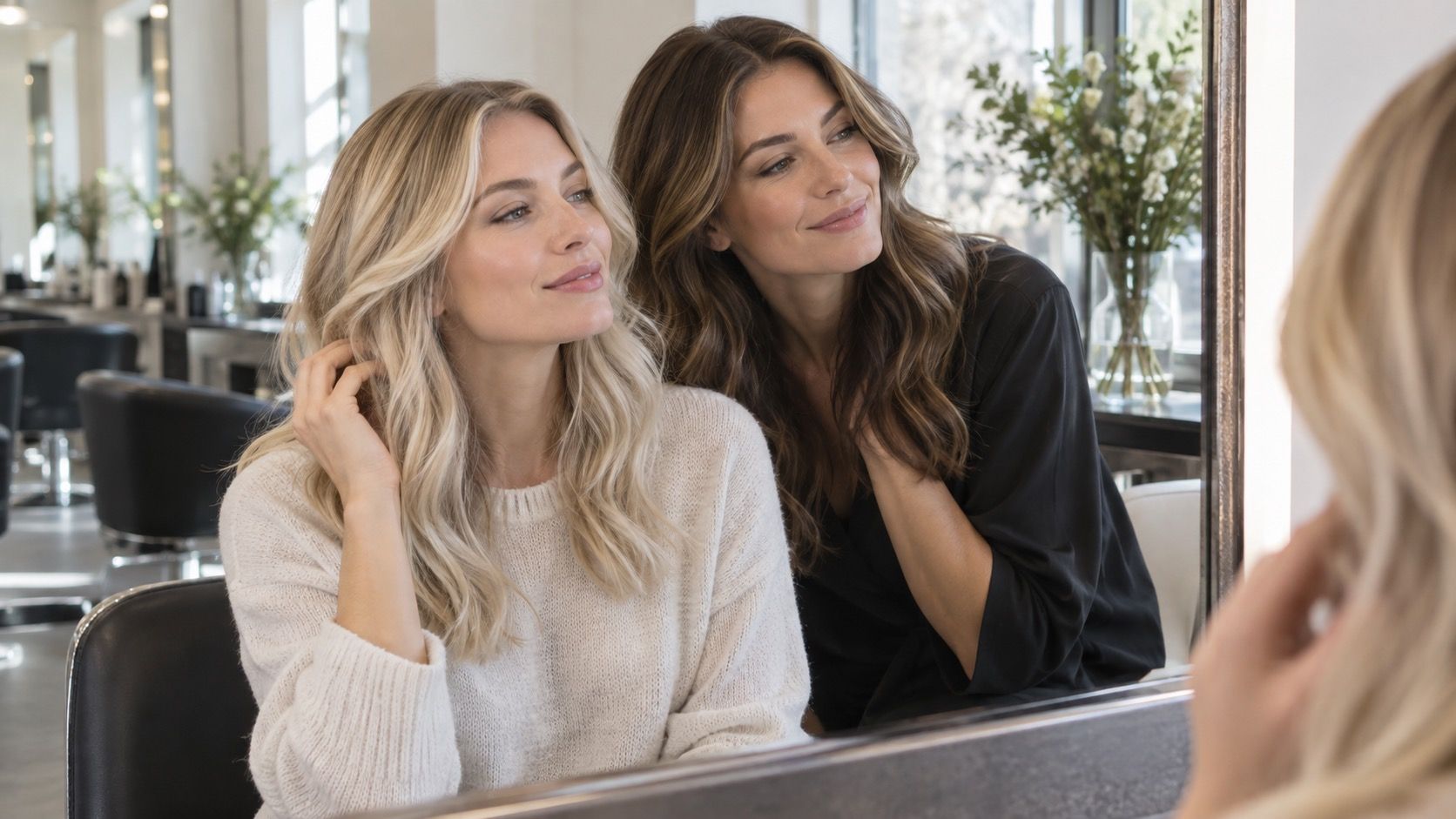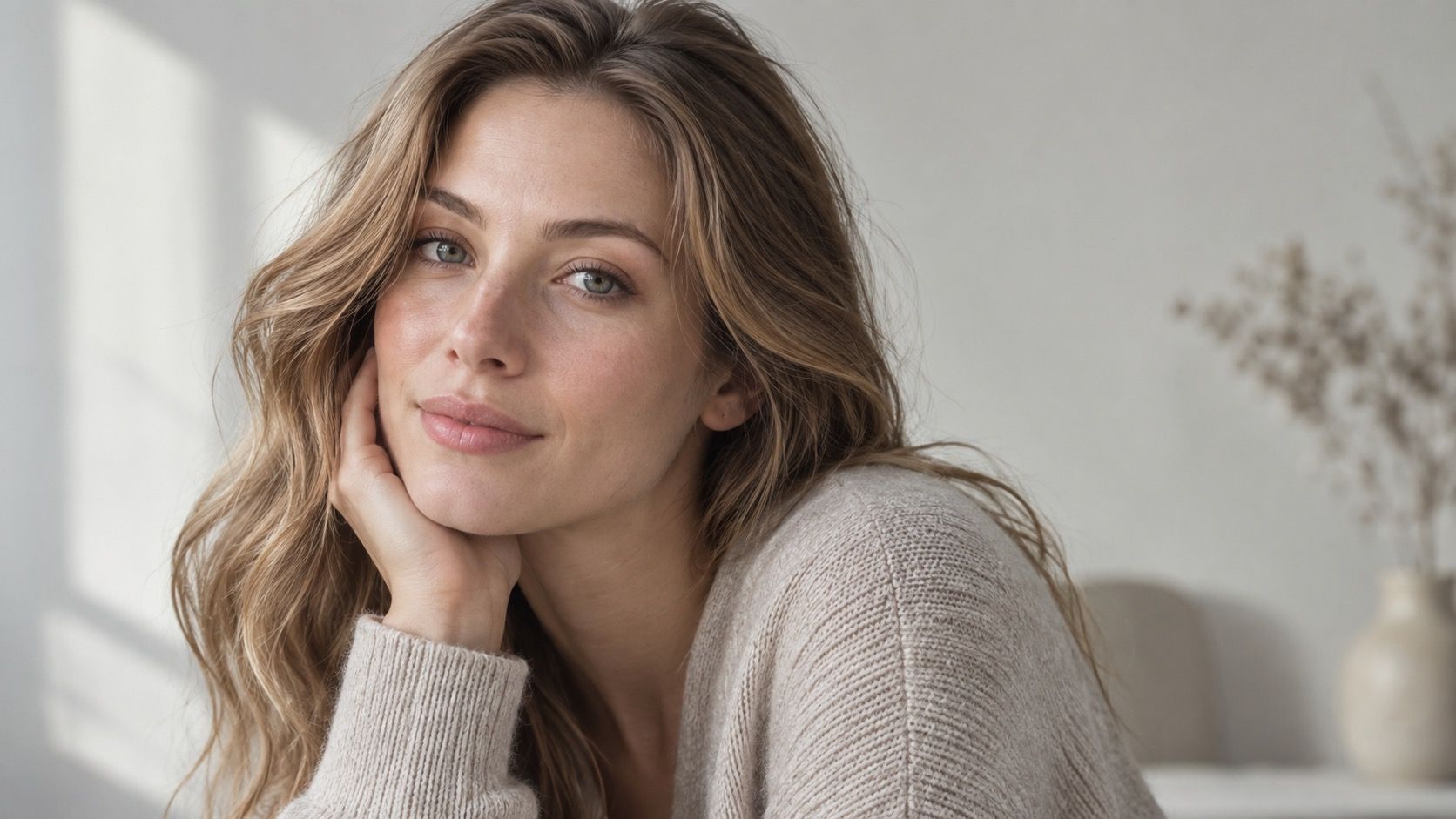
A Soft Summer hair color usually succeeds by lowering the volume, not by making the hair dramatically cooler or lighter. The useful target is a muted, cool-neutral shade that leaves room for soft skin, gentle eyes, and low-contrast features. It should look considered in daylight, but it should not look like a strong color decision from across the room.
The difference between soft and simply dull
Muted hair color is not the same as lifeless hair. A soft shade still has reflected light, small shifts of depth, and a clear relationship to the skin. What it avoids is a loud yellow, copper, black, or white contrast. Soft Summer hair often looks best when the color seems slightly veiled by beige, taupe, smoke, or mauve rather than polished to a bright, high-shine finish.
The easiest way to see the difference is to compare the hair with familiar soft colors near the face. A dusty rose sweater, a faded blue shirt, or a taupe scarf can be more revealing than a salon swatch. If the new color makes those shades look gray and tired, it may be too warm or too intense. If they suddenly make the face look clearer while the hair still has dimension, you are probably close to a useful cool-neutral balance.
Be wary of a formula that is described only as ash. Pure ash can sometimes look flat against skin with a little warmth, especially when the ends are porous. A blend that includes beige or a trace of muted mocha usually wears more naturally. The goal is not to make the hair visibly gray; it is to remove the sharpness that comes from obvious gold, red, or inky darkness.
Choose a depth that keeps features visible
Before changing the tone, decide how dark the hair can be without swallowing the face. Soft Summer features often stay visible with light to medium depth, but individual starting color still matters. Someone with natural dark blonde hair may look at home in a soft level 6 brown, while someone with pale brows and light lashes can find the same depth much too strong. The mirror test is whether the eyes still register before the hairline does.
A virtual try-on is helpful here if you compare controlled versions rather than chasing a perfect filter. Use one clear, daylight photo with no beauty smoothing. First test your natural depth, then one shade lighter and one shade darker, keeping the undertone similar. If the darker version emphasizes the under-eye area or makes the brows look faint, it may be adding contrast rather than definition. If the lighter version washes out the face, you may need depth at the root rather than more brightness overall.
Soft contrast is also about transitions. A severe root-to-highlight line can look harsher than the chosen colors themselves. Ask for a blurred root melt, fine lowlights, or a gloss that connects the base to the lengths. These techniques are practical for grow-out too: a natural root can appear after several weeks without turning the entire look into a two-tone stripe.
| Color direction | Why it can suit Soft Summer | Adjustment to request |
|---|---|---|
| Beige blonde | Lightens without a bright yellow finish | Add soft lowlights if the ends begin to look white |
| Soft mocha | Gives brown hair depth with a muted, cool-neutral cast | Keep it medium rather than dark chocolate |
| Mauve brown | Can soften a neutral brown with a restrained rosy reflection | Use as a gloss or subtle tone, not a vivid fashion color |
| Cool beige balayage | Creates movement while preserving a gentle root | Choose fine pieces instead of broad blonde bands |
Blonde options for muted contrast
The best hair color for Soft Summer is often a blonde with beige in its name. Beige blonde, mushroom blonde, smoky wheat, and muted pearl-beige are more forgiving than a clear golden blonde or a stark platinum. They leave a little shadow between strands, which helps the hair look soft and full instead of bleached into one bright surface.
For a dark-blonde base, fine highlights plus a cool-neutral gloss are often enough. The most flattering lightness may sit around the face and through the upper layers, while the underside stays nearer to the natural base. This is less dramatic than a full bleach service, but it gives the hair a believable shift in daylight and makes maintenance easier. A few lowlights can be added later if the result begins to look too pale.
For naturally light blonde hair, the risk is over-toning. Purple shampoo, silver masks, and strong pearl toners can turn healthy hair slightly lavender or dusty at the ends. Use a violet product only when yellow is genuinely visible, and judge it after the hair is dry. A gentle beige gloss is often a better long-term tool because it restores softness without forcing the hair toward gray.
Brown and copper-leaning shades to approach carefully
Brown hair can be excellent for Soft Summer when it stays airy. Soft mocha, mushroom brown, and taupe brown have enough neutral-cool pigment to keep a brown base from becoming ruddy. They also work well with lowlights because the differences in depth are small. The effect should be closer to fabric texture than a bold stripe: visible when the hair moves, easy to miss from a distance.
Very dark brunette shades deserve a careful preview. Black-brown, blue-black, and dense espresso can make a face appear sharper, especially when paired with pale skin or gentle gray-blue eyes. If you want more depth, try a medium cool brown gloss first. It is reversible, reveals how the new depth behaves with your wardrobe, and does not create a long correction process if the result feels too strong.
Soft Summer can wear a restrained rosy or copper-leaning note, but the difference between muted mauve brown and warm copper is narrow. Bright auburn, orange red, and gold-heavy strawberry shades usually add more warmth and contrast than this palette needs. A colorist can test a diluted mauve-brown gloss on a small section. In daylight, it should read as a soft brown with a quiet rosy warmth, not as red hair.
Use gloss and lowlights for a softer change
A gloss is one of the most practical ways to test a Soft Summer direction. It can soften faded highlights, cool down excessive gold, add a muted beige cast, and increase shine without committing to a full permanent color. Because it fades gradually, it gives you time to see the shade with your normal makeup, your work lighting, and the clothes you wear on ordinary days.
Lowlights solve a different problem. When blonde hair becomes too light or too uniform, a few fine lowlights bring back depth around the crown and underneath the top layer. They should be close to the natural base and softly blended. Wide dark ribbons can create the same harsh contrast that you were trying to avoid, while tiny taupe or soft mocha pieces simply make the blonde look more natural.
These services are particularly useful after summer sun, swimming, or repeated highlighting. Hair that was once a flattering beige blonde can turn bright at the ends and warm near the mid-lengths. Instead of immediately covering everything with brown, a gloss plus selected lowlights lets the colorist correct the imbalance while retaining the lightness that suits a low-contrast look.
Keep the color gentle between appointments
Maintenance starts with protecting the tone you paid for. Heat tools, chlorine, hard water, and frequent clarifying washes can expose warm pigment or make the ends porous. Use heat protection, keep hot-tool temperature reasonable, and rinse hair after swimming when possible. If your water leaves a mineral film, a periodic chelating treatment may restore clarity before you decide the hair needs a stronger toner.
Choose toning products by the problem, not by the label. Purple is most useful for pale yellow; blue is more relevant when darker lifted hair looks orange. Neither needs to replace every shampoo. Leaving a toning product on too long can make dry ends look darker or duller than fresh regrowth. Alternating it with a gentle conditioner keeps the hair flexible, which matters because shine is part of what prevents muted color from looking flat.
Bring a few daylight photos to the next appointment: one from the week the color looked right and one from the point where it began to feel too warm, too pale, or too dark. That gives a colorist far more to work with than saying the tone disappeared. Soft Summer hair colors are easiest to maintain when the formula is modest and the changes are small, so the look stays balanced even as the gloss fades and the roots come in.
Make the final choice in ordinary light
Salon mirrors, ring lights, and edited inspiration photos make nearly every color look more polished than it will at home. Check your try-on or fresh color near a window, then look again in the car, at work, and against a muted top. The right shade does not have to make you look transformed. Often it makes skin look more even, eyes look less shadowed, and clothes in taupe, dusty rose, or soft blue look intentional without much effort.
Use seasonal color language as a way to narrow options, not as a set of universal rules. A soft beige blonde may be better than ash brown for one person, while another needs a medium soft mocha to keep their features from fading. Your natural base, past color history, and willingness to maintain the result all matter. The useful choice is the one that stays soft after regular washing and still feels like your own hair.