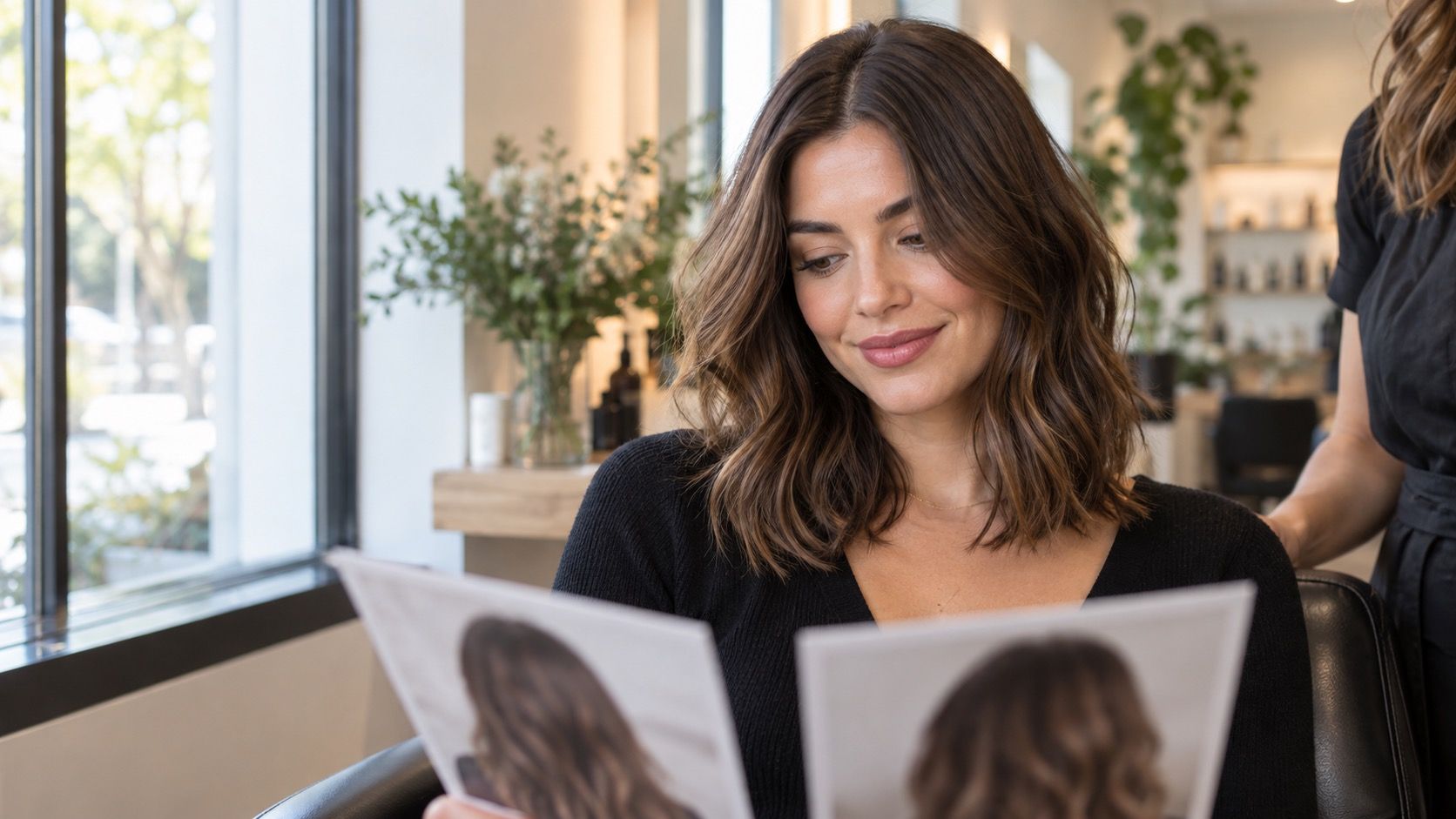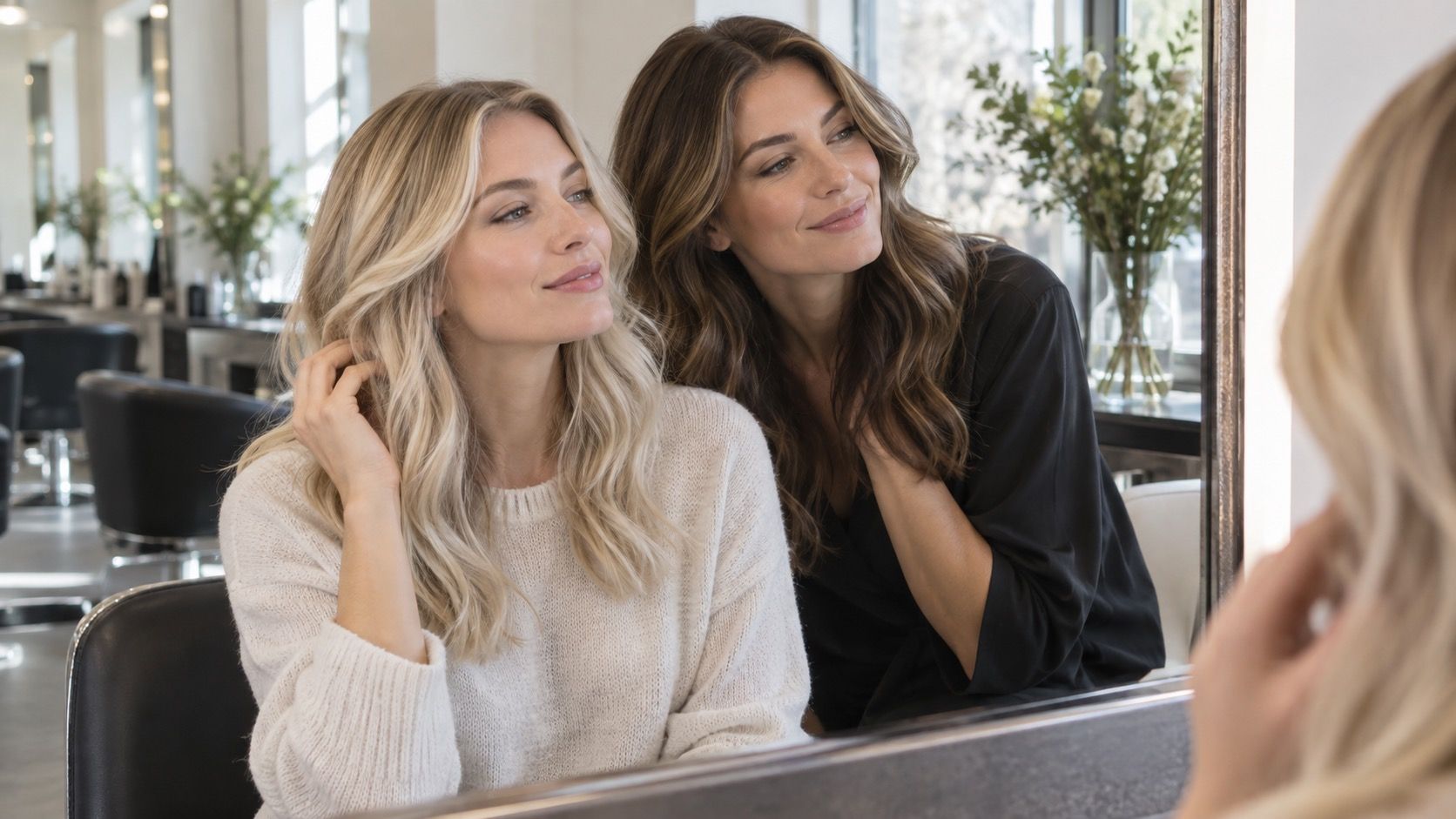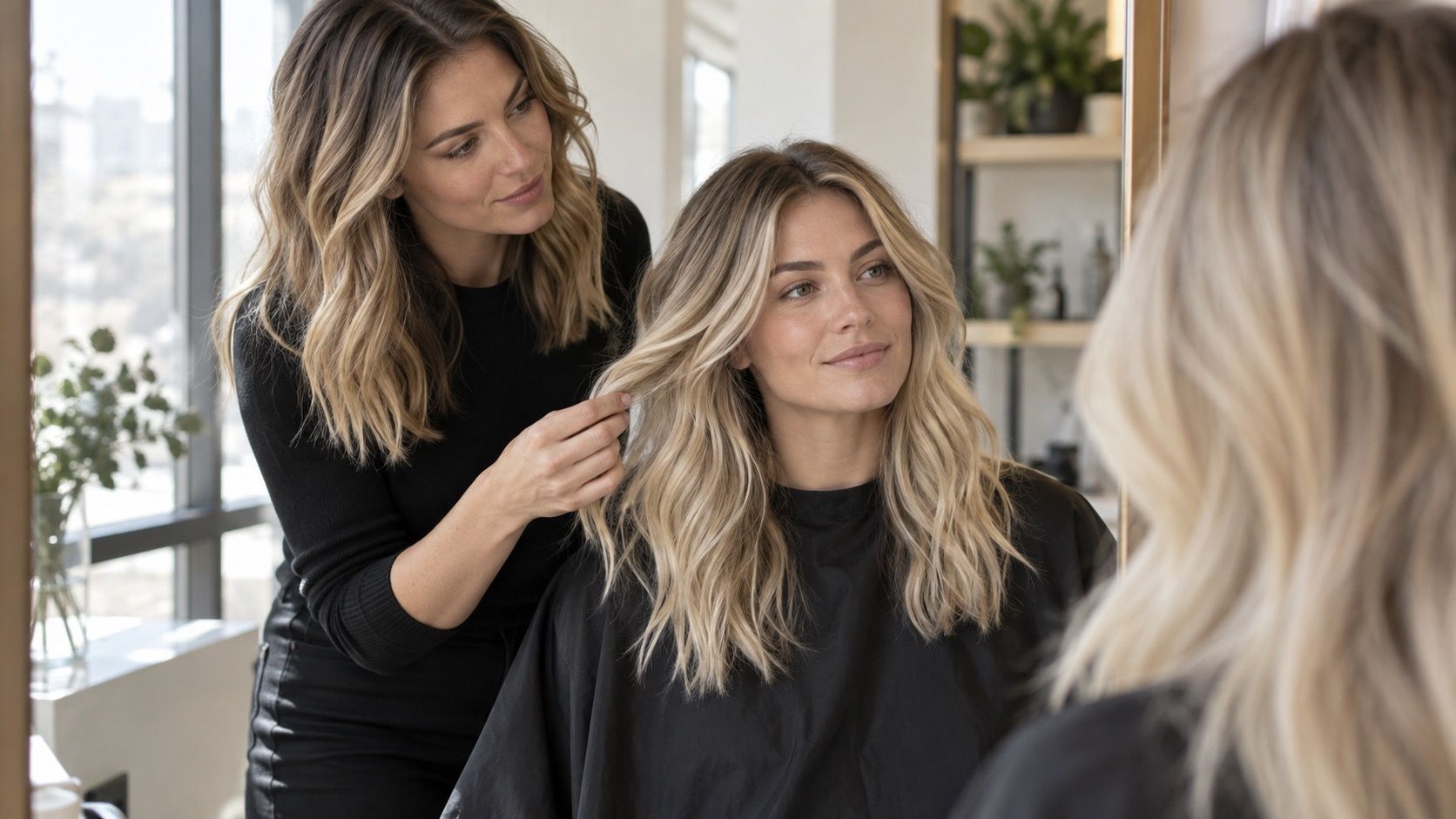
Trying on blonde before dyeing is less about finding one magical filter result and more about ruling out expensive mistakes. A convincing preview can show whether you need honey, beige, ash, or only a little brightness around the face, but it cannot tell you how your previously colored lengths will lift. I treat a hair color try on as the first fitting-room mirror: useful for direction, not a promise of the finished shade.
Choose the blonde family before chasing the lightest version
Most disappointing blonde changes begin with an image described only as “blonde.” That word covers yellow-gold honey, creamy beige, cool ash, pale pearl, and near-white platinum. Start by keeping the depth roughly similar in every virtual try-on, then compare the temperature. Looking at four very different levels at once makes it almost impossible to tell whether the face is reacting to warmth or simply to more light around it.
Use one straight-on photo taken near a window, with no portrait smoothing, sunglasses, heavy tan, or colored wall behind you. Put honey blonde beside beige blonde, then beige beside ash. If honey makes redness or under-eye shadow look more noticeable, do not assume all warmth is wrong; it may mean the gold is too clear. Beige often gives a softer middle ground. Ash can look elegant in a bright app preview yet feel severe against a warm-neutral complexion once the phone is put down.
Your natural base is a useful clue, not a rule. A medium brown base often reads believable with honey or beige ribbons before it reads believable as full platinum. Natural dark blonde may carry a cool beige blonde beautifully but look washed out with a very pale ash overlay. Save the versions that make the eyes look awake without making brows, lashes, and roots appear disconnected. That is usually a more reliable sign than whether the result looks dramatic.
Preview warmth and depth as two separate decisions
A hair color simulator often changes warmth and lightness together. That is convenient for a quick makeover, but it hides the choice you actually need to make. Create a small comparison set: your current depth, one level lighter, and two levels lighter in a similar beige tone; then repeat in a warmer or cooler tone. The screen does not need salon-level precision to show which variable is doing the flattering work.
Check those images in ordinary places. A bright bathroom can make an ash blonde look cleaner than it will at work under warm overhead lights. A car mirror on a cloudy day is often less forgiving and therefore more helpful. If a pale version makes the center of your face look blank but a slightly deeper beige version keeps the eyes visible, you may want dimension rather than a full lift. The same applies in reverse: if darker roots make the forehead look heavy, a face frame may be enough.
| Preview question | What to compare | A practical takeaway |
|---|---|---|
| Is the problem warmth or darkness? | Beige and ash at the same depth | If both feel too dark, choose more lightness before changing tone. |
| Does blonde suit the full head? | Full blonde and face-framing pieces | If the full preview erases contrast, keep a deeper root and underside. |
| Will the root bother you? | Solid light blonde and a root melt | A softened root usually gives a more believable grow-out on darker bases. |
| Is platinum really the goal? | Very pale beige and near-white blonde | If beige already gives the desired brightness, platinum adds upkeep without much benefit. |
Be skeptical of shine. Many virtual try-on tools add glossy highlights that make a medium blonde look lighter and healthier than it would on dry or porous hair. Cover part of the screen with your hand and look at the shadow areas near the temples and nape. Those quieter areas reveal the color direction more honestly. A shade you like only in the bright streaks may be a finish effect rather than a color you will enjoy every day.
Let your roots and brows vote on the result
Blonde is judged at the hairline before anyone notices the ends. On a natural medium or dark base, an all-over pale result can look striking for the first week and then feel abruptly striped as roots appear. A virtual preview with a root melt is worth making even if the saved inspiration image has no visible root. It shows whether a muted transition makes the face look more relaxed and whether the blonde still feels intentional when it is not pressed right against the scalp.
Brows matter because they supply the contrast that light hair can remove. Do not edit them lighter in the preview just to make the look feel harmonious. Instead, compare the blonde with your real brows and natural lash color. A good blonde allows those features to frame the face; an overly pale platinum can make them seem too strong or leave the face looking unfinished. This does not mean blonde is off limits. It may mean keeping the root deeper, choosing beige over icy white, or concentrating brightness around the cheekbones.
Take the same screenshot beside a white shirt and a black or charcoal top. Blonde that looks balanced against white can become yellow next to black; a cool ash that looks polished in charcoal can turn gray beside bare skin. This tiny wardrobe check is more useful than guessing your undertone from one wrist photo. You are selecting a shade to live with in regular light, not a color that wins for ten seconds on a filtered screen.
Compare full blonde with face-framing lightness before you book
A full blonde change and a partial lightening service solve different problems. Full blonde gives the biggest identity shift and the smallest margin for uneven lift, banding, or root contrast. Face-framing lightness keeps the natural base through the crown and lower layers, then places the brightest pieces where daylight naturally lands. In a virtual hair color try on, make one version with a solid blonde field and another with a deeper base, soft root, and light front panels. The difference is often clearer than the inspiration board suggests.
If your aim is to look fresher rather than unmistakably blonde, the second option may be the smarter starting point. Honey blonde ribbons can make medium brown hair look warmer without asking the rest of the hair to become gold. Beige pieces around the face can brighten a dark blonde base while avoiding the flat, single-color effect that shows up in phone photos. Fine highlights also leave room to adjust later: a salon can add brightness at a follow-up appointment, whereas taking lightness back out is slower.
Think about haircut and parting while you preview. A center part exposes both front panels evenly; a deep side part can put most of the brightness on one side. Waves break up a lighter color, while a blunt straight bob shows every transition line. If your photo has loose curls but you normally wear your hair smooth, test a straighter image too. The same blonde can look soft in movement and much more contrasted on a sleek weekday ponytail.
Plan the maintenance before saving a favorite image
Every blonde preview should be followed by a plain question: how often do you want to see a colorist, use toning care, and notice your roots? Platinum and very pale ash demand the narrowest tolerance for warmth and regrowth. Honey blonde may look less fussy at first, but on a dark starting base it can still reveal warm lift as it fades. A beige blonde with a root melt is often the least dramatic option in a screenshot and the easiest one to keep looking intentional between appointments.
Bring your three best previews to a consultation rather than one edited celebrity photo. Include a full-blonde image, a softer root version, and a backup with less lightness. Say what you prefer in each: perhaps the brightness of one, the beige tone of another, and the natural root of the third. A colorist also needs to know about previous permanent dye, box color, henna, highlights, and recent dark glosses. Those details affect what can safely be lightened, while the preview only establishes the destination.
Do not rely on a digital result to choose a toner or a bleach method. Those are technical decisions shaped by condition and color history. The value of trying on blonde first is simpler: you arrive knowing whether you are after coolness, warmth, depth, or a small face-brightening change. That makes the conversation clearer, and it leaves less room for the common surprise of getting very light hair when what you really wanted was a softer blonde around the face.